
Line stops and tapping for live
water and wastewater mains.
Isolate a section of main or add a new connection while the rest of the system stays
in service. Our line stop and tapping crews work on pressurized water distribution mains
and wastewater force mains up to 12 inches in diameter, so repairs, valve replacements,
and tie-ins can be completed without a large shutdown, boil-water notices, lost water,
or extended sewage bypass pumping.
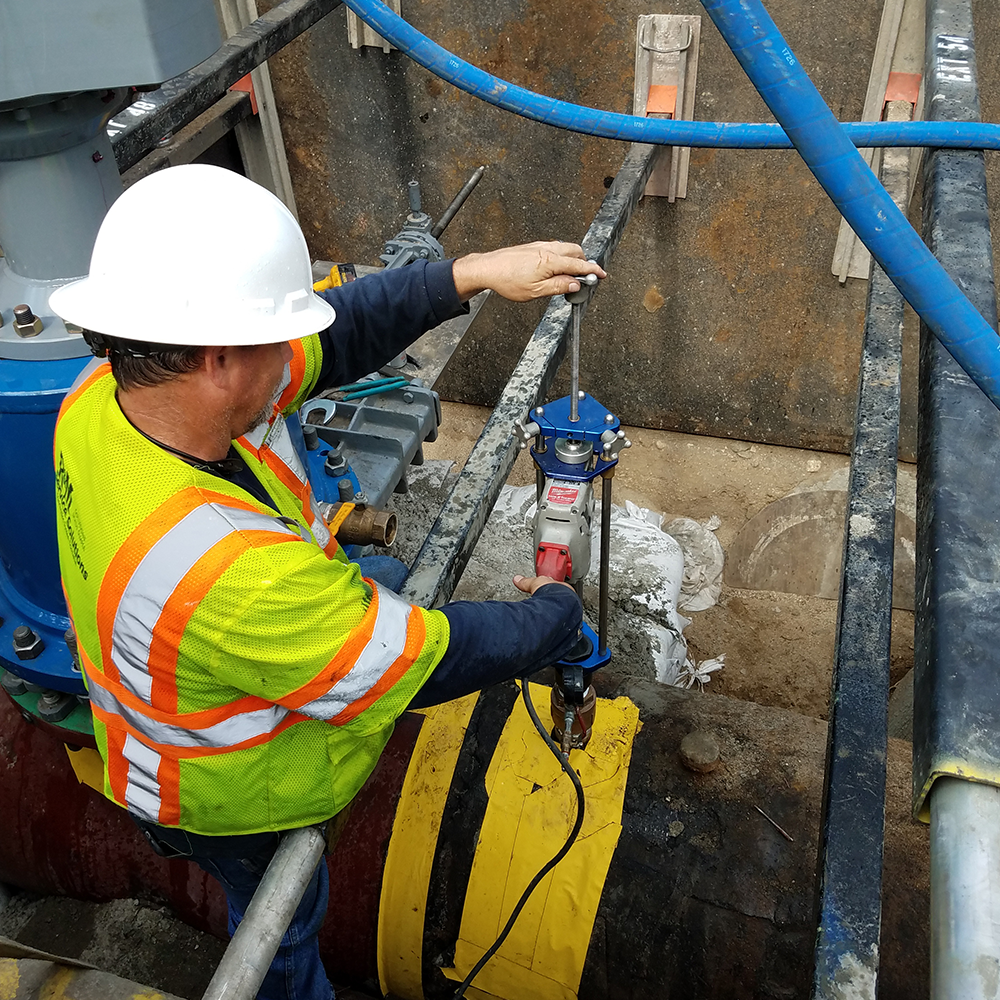
Keep customers in service while the work gets done.
Line stopping temporarily isolates one section of an operating pipeline so repairs, replacements, or modifications can be made while the rest of the system stays in service. A line stop works like a temporary valve placed exactly where you need it. It is inserted under pressure through a fitting on the main, then removed when the work is done. This is especially useful where nearby valves are missing, inoperable, or too far apart to make a small shutdown.
Water Distribution
Valve replacement, main repairs, new branch and fire line connections, and tie-ins for new construction, all while customers stay in water.
Wastewater Distribution
Plug and gate valve replacement, force main repairs, and lift station or pump station tie-ins, without a full shutdown, extended bypass pumping, or added overflow risk.
Line stopping supports
- Replacing broken, inoperable, or obsolete valves
- Repairing damaged or aging mains
- Pipeline modifications, relocations, and tie-ins for new construction
- Temporary or permanent bypass installations
- Isolating a section when an emergency shutdown would affect critical customers, such as hospitals, schools, or industrial users
Line stopping benefits
Line stops reduce the impact and cost of main shutdowns by keeping the following to a minimum:
- The length of main that must be isolated
- The number of customers affected
- The volume of water lost, flushing, or bypass pumping needed to return to service
- The planning, notification, and coordination needed for scheduled shutdowns
- The risk of operating old, unreliable valves that may not close or reopen
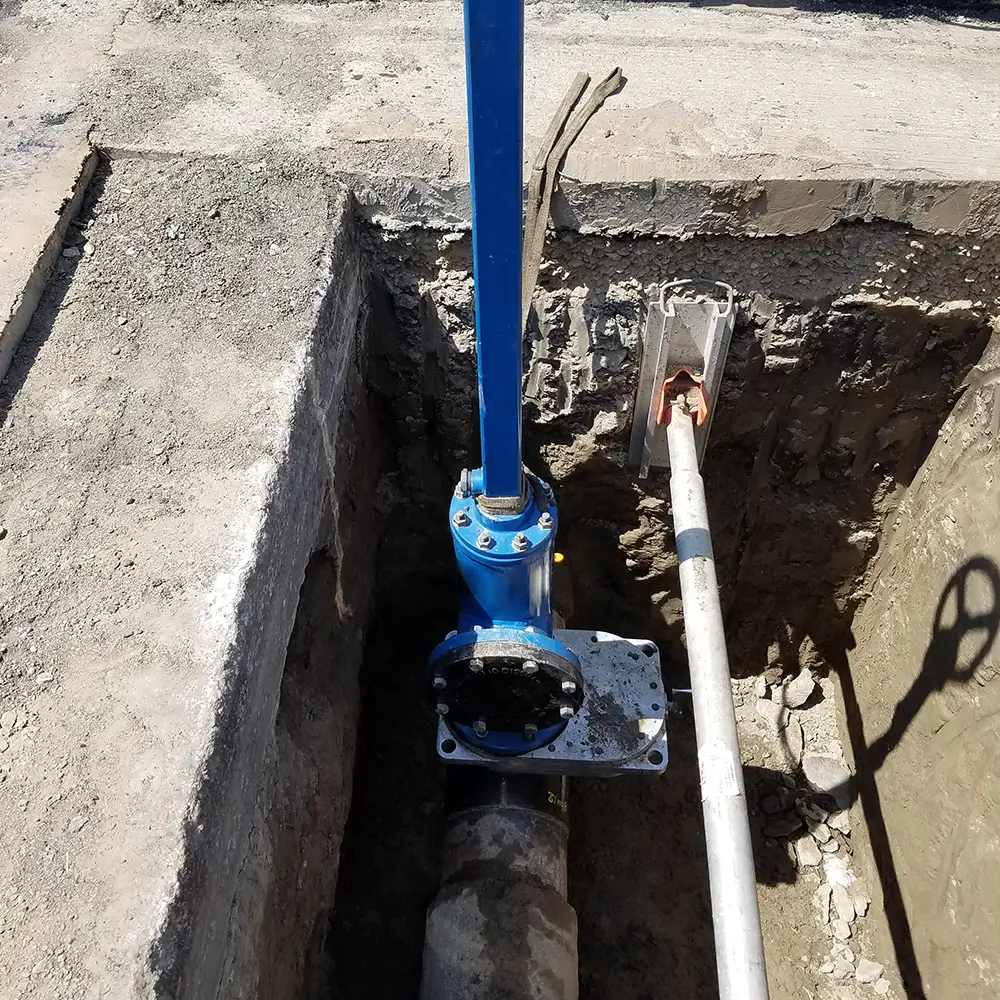
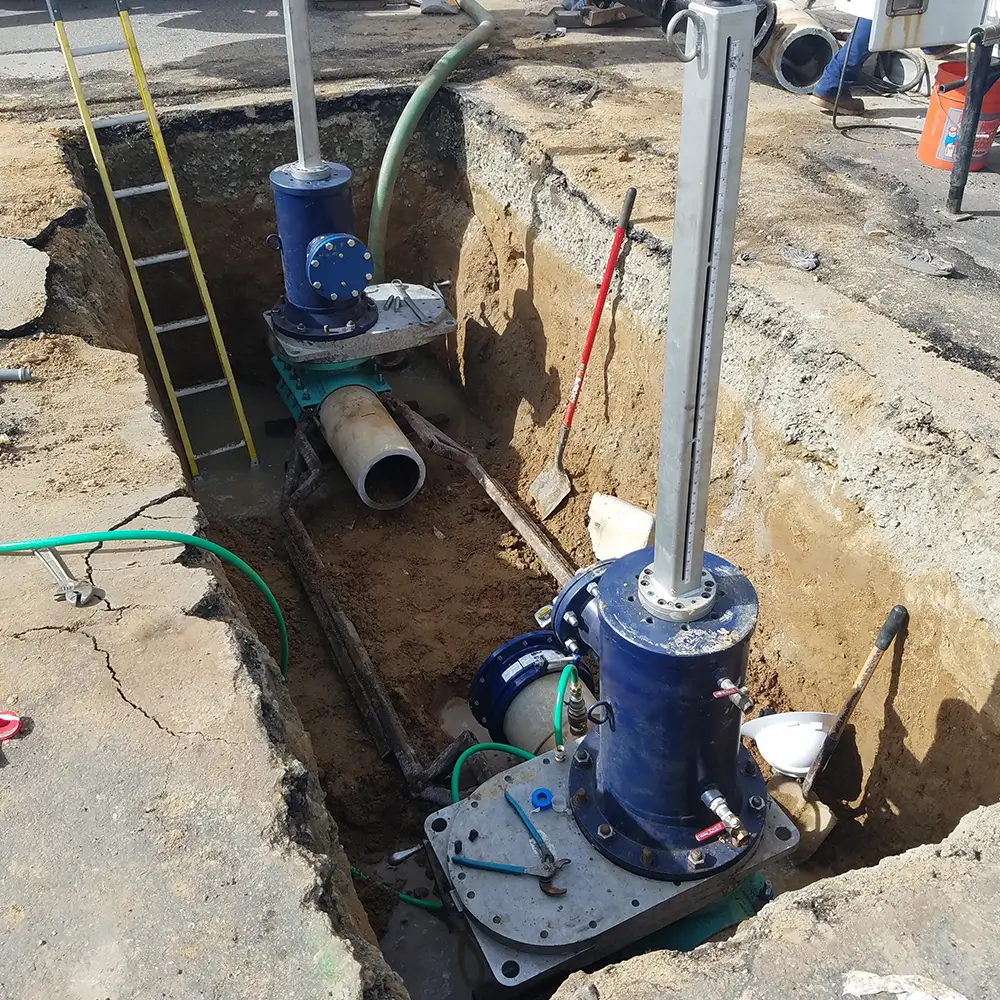
Line stop configurations.
SINGLE LINE STOP
One line stop works with an existing valve to isolate the section of main that needs work.
DOUBLE LINE STOP
Two line stops are placed on either side of the work area for positive isolation without relying on existing valves.

LINE STOP WITH BYPASS
Flow is routed around the isolated section through a temporary bypass, keeping downstream customers in service during the work.

How a line stop works
Line stopping temporarily isolates one section of an operating pipeline so repairs, replacements, or modifications can be made while the rest of the system stays in service. A line stop works like a temporary valve placed exactly where you need it. It is inserted under pressure through a fitting on the main, then removed when the work is done. This is especially useful where nearby valves are missing, inoperable, or too far apart to make a small shutdown.

EXCAVATE AND PREPARE
The main is exposed and cleaned, and the pipe’s outside diameter and condition are checked so the fitting seals correctly.

INSTALL AND TEST THE FITTING
A line stop fitting (sleeve) is installed on the main and pressure-tested, then a temporary valve is mounted on its outlet.

TAP THE MAIN
A tapping machine cuts through the pipe wall under pressure. The coupon is kept and removed, the valve is closed, and the tapping machine is taken off.

INSERT THE LINE STOP
The actuator is mounted, the valve is opened, and the stopping head is lowered into the main to seal the pipe. Crews complete repairs in the isolated section.

RESTORE AND COMPLETE
Pressure is equalized, the head is retracted, a completion plug is set, the temporary valve is removed, and a blind flange is installed. The fitting stays and can be reused.
New connections without taking the main out of service.
Tapping makes a new connection to an existing pipeline without shutting
down the system. A tapping sleeve and tapping valve are installed on the main
and tested, then a tapping machine cuts through the pipe wall under pressure.
The result is a new branch, service, or fire line connection with a valve already in
place, and no interruption to customers on the main.
WET TAPPING
A connection is made to a main that is full and under pressure while flow continues through the system. Wet taps support new branch mains, fire lines, services, bypasses, and other system improvements.
HOT TAPPING
A connection is made to a pipeline while it stays in service and under pressure. This is the first step in every line stop and allows branches, connections, and modifications without a full shutdown.
SIZE-ON-SIZE AND REDUCED TAPS
Taps from small service outlets up to full size-on-size connections on mains up to 12 inches.
From assessment to action
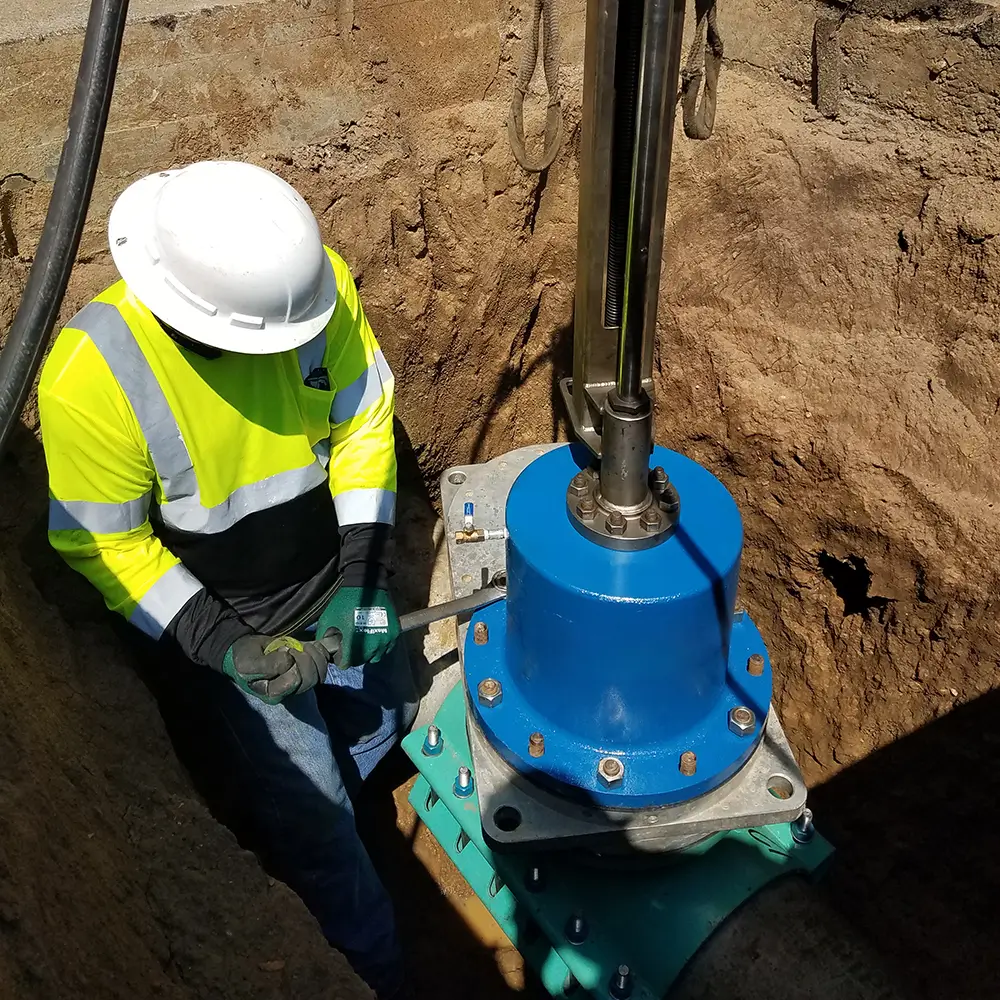
Line stops and taps are often the fastest way to act on our valve assessment findings. When we find a valve that is closed, broken, or impossible to locate, our crews can isolate the main around it and replace it, then document the completed work in your GIS and project dashboard. For wastewater utilities, line stops and taps let crews act on force main inspection findings without taking the main out of service.

12”
Line stops and taps on live mains, up to 12-inch

2M
Valves assessed and maintained

750K
Fire hydrants assessed and maintained
Plan your next line stop or tap with a utility infrastructure expert.
Submit your details below to discuss your project, timeline, and site conditions.