
Fire hydrant repair and replacement for reliable fire protection.
Fire hydrants have to work the moment they are needed. Our crews repair damaged and leaking hydrants, replace units that are beyond repair or obsolete, and install new hydrants on distribution mains, keeping your fire protection system ready.
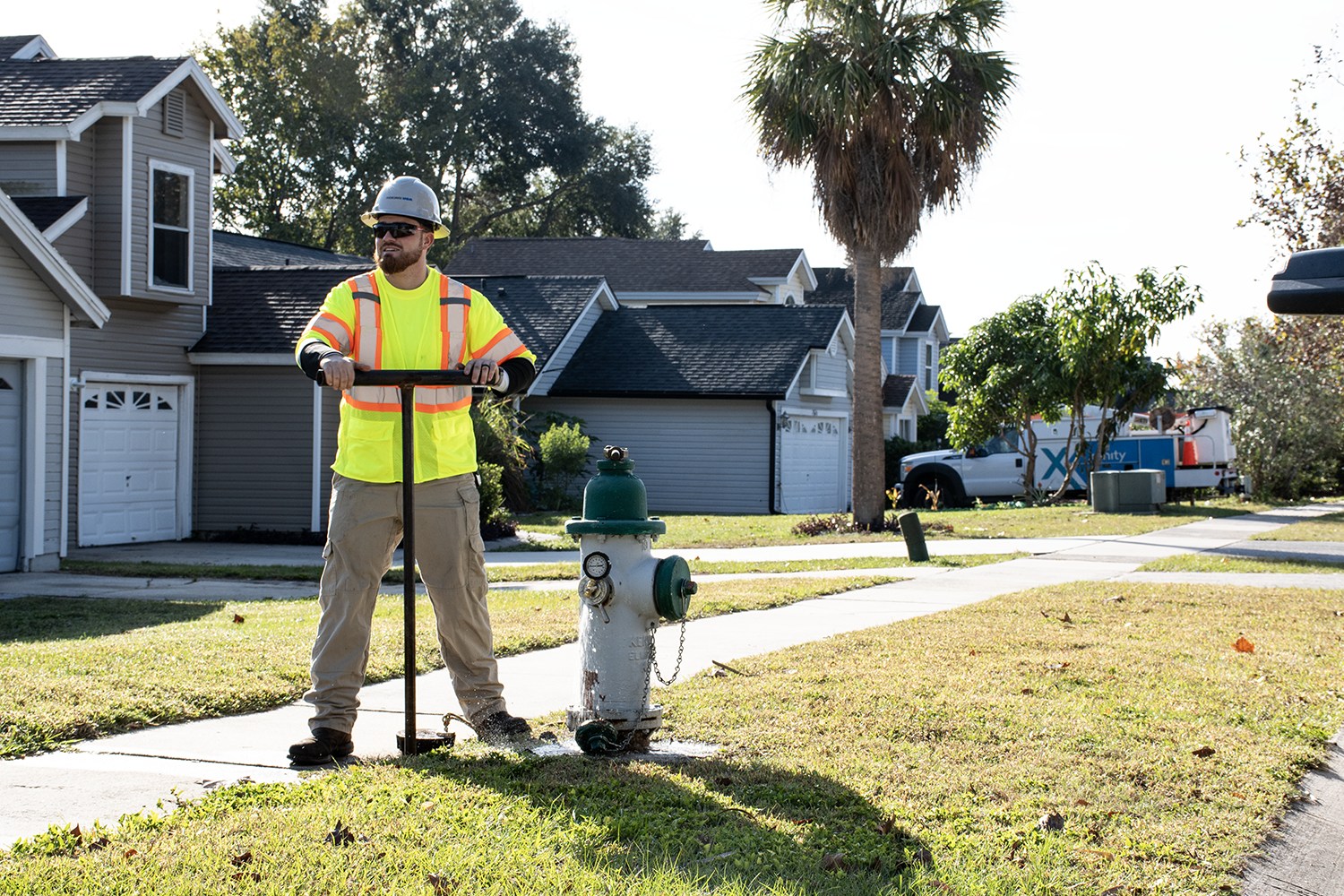

Repair what can be saved, replace what can’t.
Damaged, leaking, or inoperable hydrants affect system reliability, fire department confidence, and ISO ratings. Because our hydrant maintenance program already identifies these problems, our repair and replacement crews can resolve them quickly, often during the same program.
Fire hydrant repair
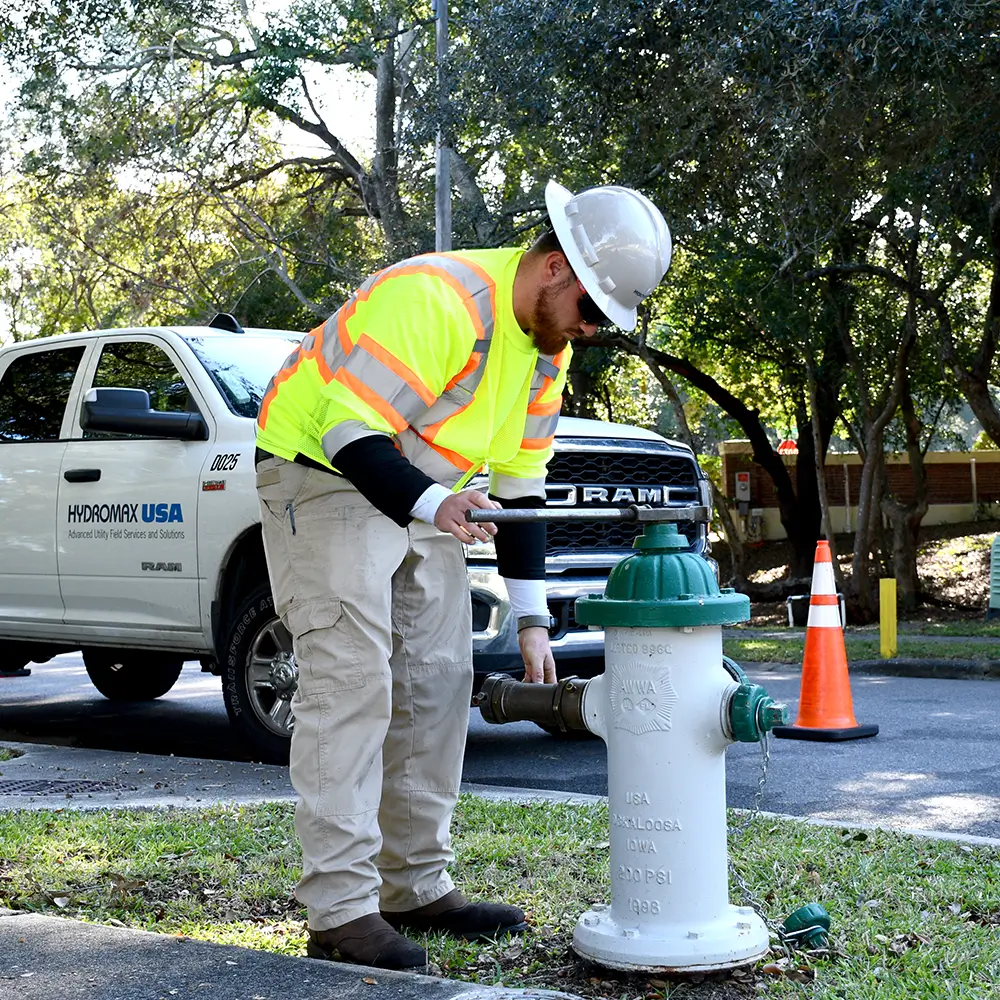
Not every hydrant needs to be replaced. When a hydrant can be repaired, targeted repairs restore proper operation and extend the life of the existing unit.
Hydrant repair services include:
- Internal repairs, including stems, seals, O-rings, and drain valves
- Main valve repairs and replacement
- Upper and lower barrel repairs
- Bonnet, nozzle, and flange bolt replacement
- Traffic (breakaway) kit replacement after vehicle damage
- Leak repairs at the hydrant, lateral, and auxiliary valve
- Grade adjustments and hydrant extensions
- Other point repairs and operating problems
Fire hydrant replacement and new installation
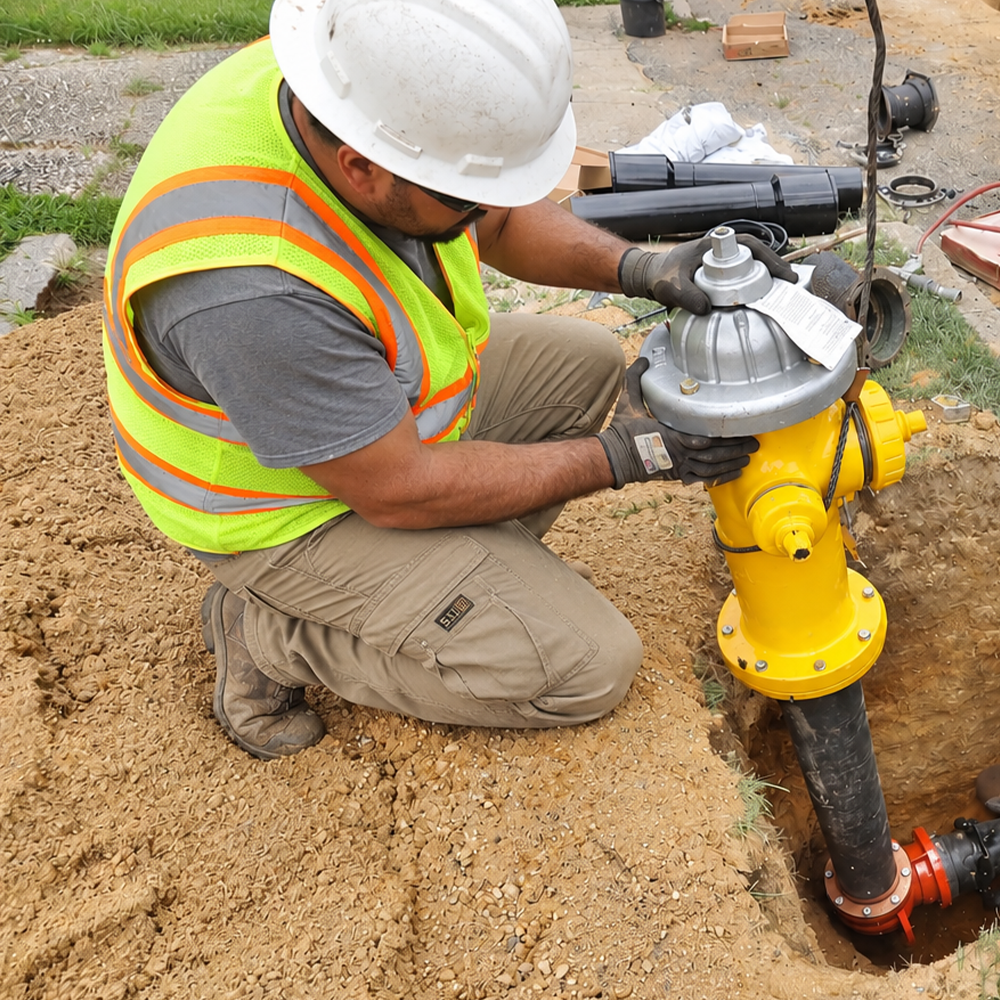
When a hydrant is damaged beyond practical repair, obsolete, or no longer supported with parts, full replacement is often the best solution. We also install new hydrants to close coverage gaps, support new development, or meet fire-flow and spacing requirements.
- Replacement of obsolete, damaged, or unsupported hydrants with the utility’s standard model
- New hydrant installations, including the tee or tap, auxiliary valve, lateral, and restrained joints
- Hydrant installation with a tap or line stop to avoid shutting down the main
- Auxiliary (isolation) valve replacement and installation
Supporting services
Repair and replacement projects often need additional work to safely access, repair, test, and return infrastructure to service. Depending on the project, this can include:
- Isolation valve work
- Hydrant exercising and operational checks
- Flow and pressure testing
- Leak checks
- Painting, NFPA 291 color coding, and hydrant identification and documentation
- Site excavation and restoration
- Live updates to your hydrant dashboard for fire departments and customer service staff
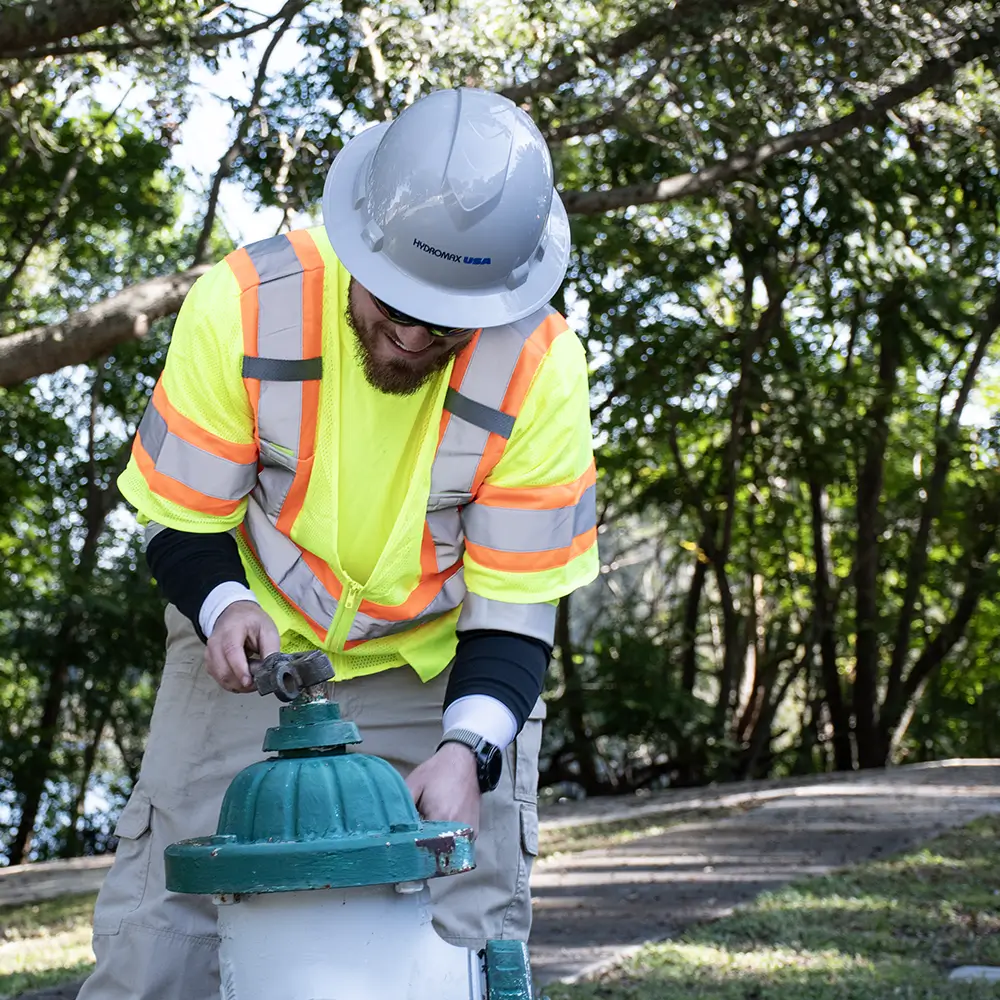
From assessment to action

70K
Miles of pipeline flushed

750K
Fire hydrants assessed and maintained
Keep every hydrant ready to perform.
Submit your details below to discuss hydrant repair, replacement, or new installation with a water infrastructure expert.